Automatic Gas Greenville
800.435.7427
Automatic Gas Mt. Enterprise800.735.7427
Automatic Gas Home
Contact Automatic Gas
Automatic Gas Locations
Make A Payment

Automatic Gas - Safety Reminders
EMERGENCY PROPANE SAFETY PROCEDURES
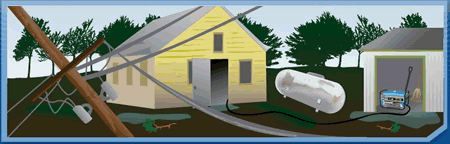
If you smell propane and/or suspect a gas leak, do not do anything that can cause a spark or flame. Any spark or flame in the area where propane gas is present may ignite the gas. (Click the image below to view a virtual home tour.)
Take the following steps when you smell propane or suspect a leak:
- Immediately put out all smoking materials and other open flames
- Do not operate lights, appliances or electric equipment — Click to View: English | Espanõl
- If possible, close all gas tank, cylinder or gas meter supply valves — Tank and cylinder valves turn off in the clockwise direction. Gas meter valves are in the off position when the handle is perpendicular to the piping
- Ventilate the area — Click to View: English | Espanõl
- Get everyone out and leave the area at once
- Call your local fire department and propane service professional from a safe place such as a neighbor's home
- Do not re-enter the area until it has been inspected by a professional and determined to be safe. Make sure the area has been aired out prior to your return
- Have a propane trained service professional repair any leak, turn on the gas, leak test the system, check all the gas appliances and relight the pilot lights
- Important Note: When called to your home for an Out-of-Gas situation, the Automatic Gas Co. technician/representative will need access to your home in order to complete a thorough GAS Check inspection. Someone will need to be home to allow an Automatic Gas Co. representative to enter your residence.
Click to view